A customer calls back two days after a gutter clean. One downpipe is still blocked. The franchisee sends an operative round the next morning, sorts it, apologises — no charge, obviously.
Now: how does that visit get recorded?
In most field service businesses, it doesn’t — or it gets recorded badly. And that’s a bigger problem than it looks, because the jobs you don’t invoice are some of the most informative jobs you do.
The two bad answers
Businesses that run their operations through a job system usually handle free work one of two ways.
The zero-pound invoice. The callback goes in as a normal job and produces an invoice for £0.00. The customer receives a bill for nothing, which looks odd at best. The invoice list fills with entries that aren’t really invoices. And every revenue report now needs a mental footnote: some of these jobs aren’t real sales.
Off the books entirely. The operative just goes round. No job record, no photos, no line items. The visit is invisible — to head office, to reporting, and to whoever serves that customer next. Six months later, nobody can say whether that property has had one remedial visit or four.
Both answers fail the same test: free work is still work. Someone drove there, spent an hour, used materials. The only thing missing is the charge — so the record should drop the charge, not the work.
What a proper non-chargeable job looks like
Jobs360 makes this a first-class distinction: every job is either chargeable (the default) or non-chargeable — for remedial visits, warranty work, and goodwill gestures.
Mark a job non-chargeable and the price fields disappear, the lines are stored at zero, and the job skips invoicing entirely. It doesn’t appear in uninvoiced lists or counts, and bulk invoice runs ignore it. Nothing to void, nothing to explain to the customer, no £0.00 paperwork.
Everything else works exactly as normal. Job lines record what was done. Photo and signature requirements still apply. The schedule shows the visit like any other.
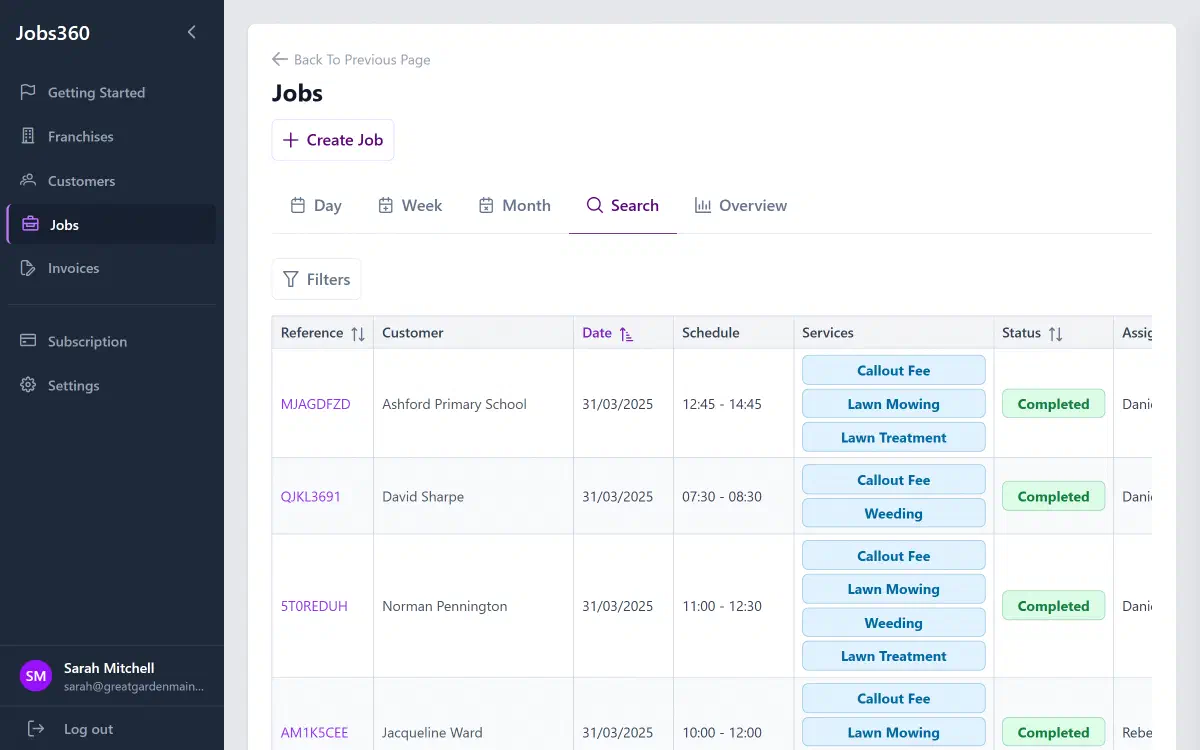
For the callback scenario, there’s a shortcut: create callback job on any completed job opens a linked copy — same customer, same address, same lines — already marked non-chargeable with the prices zeroed. The link between the original job and the callback is kept, so the history reads the way it happened: this visit exists because of that one.
Why the record matters
Recording free work properly isn’t bookkeeping tidiness. It changes what you can see.
Callbacks are a quality signal. A franchisee whose work generates one remedial visit a quarter and one whose work generates one a week are in very different shape — but if callbacks are off the books, both look identical from head office. Jobs360’s network overviews now show a non-chargeable rate alongside the other franchise metrics, which turns “I’ve got a feeling about that territory” into a number you can watch move.
Evidence lives with the job. Photos on a warranty visit answer the question that always comes later: was this actually put right? When the record is in the system — with the same photo requirements as any other job — the answer is two taps away, not a search through someone’s camera roll.
Customer history stays complete. The next operative to visit sees the callback in the history and walks in informed. And handled well, a prompt free fix is a retention moment, not just a cost — customers rarely leave over a mistake; they leave over how it was handled.
Your averages get honest
There’s a subtle statistical benefit, too. Once free work enters the system, it has to be kept out of the wrong numbers — a £0 job would quietly drag down every revenue average it touched.
So Jobs360 divides average job value by chargeable completed jobs only. Goodwill visits no longer dilute the number that tells you what a job in your network is actually worth. (One side effect to expect: if your franchisees do regular warranty work, average job value takes a small step up when those jobs start being recorded properly — and revenue divided by total completed jobs will no longer match it. That’s by design: they’re now answering different questions.)
The same principle keeps free work out of your fees. Non-chargeable jobs never produce invoices, so they never touch MSF calculations — a franchisee doing the right thing by a customer isn’t billed a management fee for it.
The habit worth building
The operational rule is simple: if someone drove to a property, there’s a job record — whether or not there’s an invoice. Chargeable or non-chargeable is one field, switchable right up until the job completes.
What you get back is a complete picture of where your network’s time actually goes, an early-warning number for workmanship problems, and customer histories that tell the whole story rather than just the billable parts.
Non-chargeable jobs and callback tracking are included on every Jobs360 plan — head office and your first franchise are free forever. Get in touch if you’d like a walk-through.