

A conversation with Andy Cheetham, founder of Lime Licensing Group. Interview by Tony Johnston, FranchiseAir.
Andy Cheetham has been in franchising since the early 1990s. He franchised his own family business, grew it into a large network over ten years and sold it, then went on to build and run more franchise systems of his own before founding Lime Licensing Group in 2012. Lime is a franchise consultancy with consultants across the UK and in North America, and Andy is a BFA Qualified Franchise Professional and a regular speaker at the International Franchise Show.
We asked him about the decision to franchise: how to tell whether a business should be franchised at all, what has to be built before the first franchisee signs, how long that takes and what it costs, and what changes for the founder. His answers come back to one test. Is the business already profitable, and could an ordinary person replicate it?
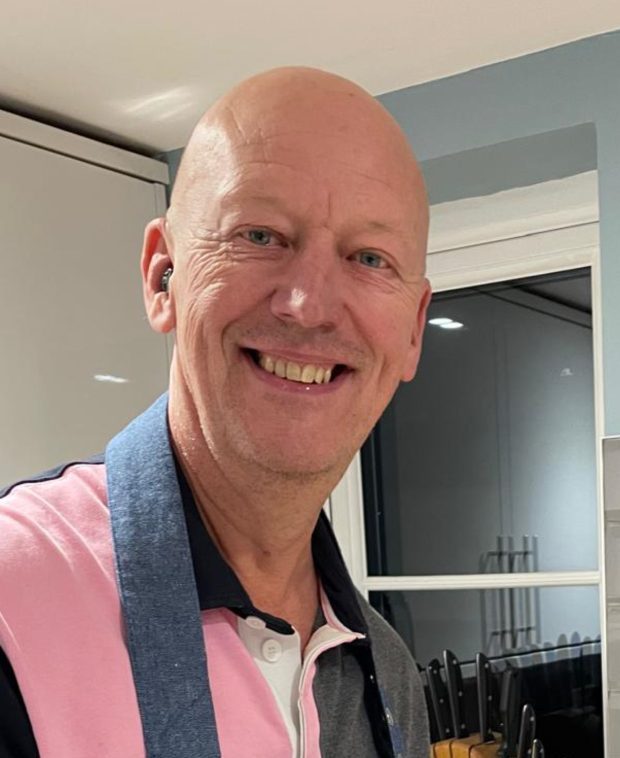
The full conversation — 22 minutes.
In this conversation
- Franchise what is already profitable — a business hovering around break-even is "the worst thing you could possibly franchise"
- The replicability test: could an ordinary person run it, or does it depend on the founder?
- Own your trademark before you franchise, and don't be late to the party
- A franchise is a business within the business: 28 to 30 things to put in place before franchisee number one
- Fee modelling, a 40 to 50-page agreement, a pilot, a prospectus, territory decisions
- Eight weeks to design a system; what the trademark, the legals and the consultancy actually cost
- The founder's two-hat role — franchisees aren't staff, and you can't wield the stick
- The mistake he keeps seeing: taking the first franchisee who turns up with a cheque. "The first three are your worst three"
- The one thing to get right before you spend a penny
Thirty years in franchising
Tony: Hi, I’m Tony Johnston of franchiseair.com. I’m here with Andy Cheetham of Lime Licensing Group, and today we’re going to talk about the decision to franchise. So firstly, Andy, hello.
Andy: Hi, Tony.
Tony: Why don’t you tell us a little bit about yourself, Andy?
Andy: Yeah, I’ve been in the franchise industry — well, more years than I care to remember now, actually. Pretty much all my working life; I’m 60 now. Originally I worked in our family business, and we ended up franchising it. We were quite successful over a ten-year period, built a very big franchise network, and then we sold that. And then I started advising other brands how they could do the same. So I was a jobbing franchise consultant for quite a while, but the environment that I’m in is all about the brand and replicating the brand, and I got an opportunity to bring somebody else into the company, who’s my current business partner, Richard Pakey. Lime Licensing Group was created then as a proper business rather than a sole trader. We ended up bringing in more and more people, and all our services really are helping companies to explore franchising and to grow through franchising. We do some brand licensing as well, but mostly franchising. And we work right across the sector. After 30 years, I think we kind of know pretty much everything we need to know now — there’s not that many surprises left for us. But our future is going to be the same as our past, which is just helping companies to become franchisors and to bring in franchise partners.
Tony: Excellent. And what’s the web address there at Lime Licensing?
Andy: It’s limelicensinggroup.co.uk.
Tony: And I’m sure if people are interested in what you say, and in franchising generally, you’d welcome contact with them.
Andy: Of course. It’s my favourite topic.
Should you franchise at all?
Tony: So today we’re going to talk about the decision to franchise. My first question would be: should people franchise at all? What do you look at when people ask for the first time, “what about franchising?”
Andy: I think one of the drawbacks to franchising, if you’d call it a drawback, is that nearly all of the stats show that franchisors and franchisees are running profitable, successful businesses. But it’s a business like any other at the end of the day, and if that core original business is not a profitable concern, franchising is definitely not the answer. You should be franchising what is already successful, already profitable. So that’s always the number one default position for me. A business that’s hovering around break-even or losing money — man, that is the worst thing you could possibly franchise. It has to be already set up, doing well, and able to sustain some extra cost, because a franchisee is going to have extra cost in the form of a royalty. So whatever business you’re running, it has to be profitable and it has to be able to sustain some extra cost, because that’s what your franchisees are going to be carrying. So I suppose that’s the first one.
And then the second point, really: is it replicable in the hands of, let’s say, an ordinary Joe? If I was picked by the England football team to be the next centre forward, they could train me till I’m blue in the face, but would I be as good as Harry Kane? There’s no chance, is there? So you’ve got to be replicable in the hands of an ordinary person, if you like.
There are a few other things as well. You don’t have to own your brand, but it’s really preferable to own your brand, because you certainly would need the rights to franchise if it wasn’t your brand. So just things like ownership of the brand — which in franchising cases is really all about a registered trademark. Do you actually own your brand? That’s really, really important, because if you don’t own that brand name through a registered trademark, and it turns out somebody else does, then you end up franchising something that is going to affect somebody else’s brand. You’re just going down an avenue which is fraught with problems.
But we see some brands as well who are very late to the party, Tony. It’s no good trying to franchise something which was a big hit ten years ago and now that moment’s gone, or the market’s turned, or now it’s in decline. Actually, even timing matters.
Can it be replicated?
Tony: Okay. You mentioned the business has to be replicable. What would a business that isn’t like that look like? How do people work out whether the business really can be replicated?
Andy: Well, I suppose it’s principally down to the owner’s judgement as to how replicable it is. But some businesses, by their nature, are local, aren’t they? We were just talking earlier about walking Hadrian’s Wall, up in Cumbria. Over there everybody eats Kendal mint cake — there’s a great market for it over there — but would you be able to sell much of that in Plymouth? Probably not. So that’s not replicable, is it? Or a business where, for other reasons, maybe the technical ability of the company owners or the people who are running the business at the moment is such that they have to be trained over four or five years to be able to replicate it. Well, that’s not really replicable, is it? Because no one’s going to wait four or five years as a franchise owner before they can truly monetise it. So it’s a lot of common sense, things like that, really.
What has to exist before franchisee number one
Tony: Okay. So let’s say we have a prospective franchisor who has cleared those hurdles — thinks, yes, it could be replicated, it could be profitable, I own the brand. Typically, what has to be in place before you go from that decision to signing your first franchisee?
Andy: Well, I suppose if you were to consider it, franchising is kind of a business in a business, really. Whatever business you’re in, that’s your business, and fair enough, you’re dealing with customers and you’ve got your staff and one thing and another. But when you become a franchisor, you’ve got a business within the business, because really you’re selling franchise opportunities now, and then your role is a business coach for those franchisees. So it’s like two businesses under the same brand name.
So a lot of the things that we look at when we design a new franchise system: how are all these parties going to co-exist so that they don’t clash or bump into each other? How do they work together, not in competition with each other? And then there’s all sorts of invention that needs to be done. I think we go through probably about 28 to 30 core things that we create or put in place before a business becomes a franchise, and there’s a whole plethora of things. I mentioned trademark earlier on. It’s surprising how many brands don’t have their own trademark — I’d say their own trademark: it’s not their trademark until they’ve got the trademark. It should rightfully be theirs, let’s say. So that needs putting in place, really.
Tony: What other things would be on that checklist? Examples of things on that checklist?
Andy: There’s a fair bit of number crunching to be done, because obviously wherever the sales are, they need to support a royalty level, and they probably need to support an advertising contribution that is paid by franchisees and managed by the franchisor. These days as well there are lots of subscription and tech fees that are fixed fees in franchising. All of that needs modelling.
As you would expect, there’s some fairly hefty legals. Franchise agreements — it’s not unusual, even for a fairly slimline franchise agreement, to be 40, 50 pages. That needs creating. Possibly as well, there might need to be a pilot scheme run, so that there’s evidence that the franchise brand can be replicated by a third party. There needs to be some careful consideration — running a test franchise, which is often called a pilot franchise, a similar thing.
But then, because they want to sell franchises, there’s franchise marketing to be created. That would probably be in the form of advertising and marketing, a franchise prospectus which details the opportunity, and decisions to be made on territorial rights — if there are any territorial rights, so a franchisee has an exclusive region, for example, what should that be, and how big or small should it be? There’s a whole plethora of things, and we basically go through all of those one at a time, usually with the business owner, or certainly a very senior person, because all of those decisions are really big, high-level decisions that need to be taken by someone with authority in the brand.
How long, and what it costs
Tony: Okay. And so typically how long does that process take? It sounds quite a lengthy, involved process — and I guess it’s “how long is a piece of string” — but what sort of timeframe do you typically see, from that idea to a pilot franchise, or to the actual first franchisee?
Andy: Well, if we’re designing a system, it’s eight weeks. Unless somebody else slows it down — which is the client, typically — it’s eight weeks. Over that eight-week period we map it all out, start to finish, things in a logical order, so that at the end of that eight weeks they’re ready to launch that franchise system.
Tony: Gosh, that’s actually quite quick. I’m quite impressed and surprised.
Andy: Well, I don’t know. I think it depends on where you look at it from. This is our line of business; we’re experts at it. We’ve franchised hundreds of businesses and we’ve taken lots of our clients to market-leading positions — some have had hundreds of millions of pounds of valuation — and we really know what we’re doing. It’s a very slick, efficient process, and so for us, eight weeks. We drive it for eight weeks, and sometimes we have to drag our clients along with those eight weeks, but we’ve got it down to eight weeks and we would deliver it in eight weeks.
Tony: Wow, okay. And again, just a general idea of cost. It’ll very much depend on the type of franchise, I’m sure, but what sort of range of costs are you seeing — perhaps with a few examples of types of business that might have a particular cost associated with them?
Andy: Do you mean to design the actual franchise system?
Tony: Not just the cost of design, but also the cost of the other things that you mentioned, like legal and trademarking and all of that.
Andy: Well, the trademark is very inexpensive — a couple of hundred quid for one classification, that’s really straightforward. The legals, depending on whether you use Fred the local lawyer or a more established legal firm, will vary from probably two and a half grand up to — well, ten I’ve actually seen in some cases — but maybe the average is about five or six thousand, something like that.
From our point of view, we don’t really say to a client it has to be done this particular way, because there are some things which — although a franchise specialist wouldn’t necessarily like to admit this — we would openly say to our clients, you don’t necessarily need years of franchise experience to do certain things. They can be done in-house. What you need is someone to say, this now needs to be done, and this is how it should be done. And then the client could do that themselves if they wanted to.
We’ve settled into a system now where we’ve got three propositions, basically. We will do absolutely everything in that eight-week process, and we will deliver that in eight weeks — we would typically charge twelve and a half thousand for that. But also, if the client then wants to do some of the things which, by their nature, you don’t need to be a franchise specialist for — but they do need completing nonetheless — they can take out a fair bit of cost, probably about half of that. They can take half of that cost away, and we would do the things which they’d need us for, and then we would just help them to deliver the other things as well. But we also run a DIY course over eight weeks, which is 250 pounds a week. It’s a mastermind group, where we take them through all of the things that we do, all the key considerations that they need, and we provide the things which we can provide in template form, for those things which are simple. For example, a non-disclosure agreement: you go to your lawyer, they’re going to charge you a few hundred quid, but actually a non-disclosure agreement pretty much is a non-disclosure agreement, so they could use ours with our blessing.
So anywhere between two thousand at the bottom end — which would be them forming part of a mastermind group with us, and that would be them doing it themselves but under our guidance — and the top end would be twelve and a half, and that would be if we deliver everything: one of our specialists delivers the whole project for them. So anywhere between two and twelve and a half.
What changes for the founder
Tony: So one interesting thing that I guess changes is the role of the founder. At one point you’re running a successful business, and then suddenly you’re running a franchise. How do you see that role changing, and are there particular challenges there? Do some people struggle with it? What’s your general advice?
Andy: I think everybody struggles with it. It’s something you need to adapt to. But I think the key one is: you’re no longer selling widgets like you used to sell widgets, or providing that service like you used to provide that service. When you’ve got a franchise department, although it’s the same brand, it’s a completely different style of business, and therefore it’s a completely different style of leadership. Your franchisees are buying a business opportunity, and they need business coaching skills and motivational skills — but they’re not staff. You can’t really wield the stick like you would do with a member of staff. Your franchise partners are independent of you.
So that founder’s role, I think — it’s a two-hat role. On the one hand, the business you’ve always run, you do just the same: you’ve got staff, those end customers are your customers. But as a franchisor, you’ve got the franchisee in between you and the customer now. So it’s a bit more of a diplomatic role, I think. But it’s definitely a very different role to running, in nearly all cases, what the core business was.
Tony: And do you see some founders giving up on their role as a business person — the original business? Do you see that as a good idea, or does that not happen?
Andy: I don’t know if it’s a good idea or a bad idea. I think it’s just a different way of doing things. Certainly the brands that I’ve owned as a franchisor — which have been seven now — I’ve nearly always retained part of that core business and ended up running it as a franchise, in many ways. So it keeps you very, very in touch with the sharp end of your business.
But ultimately, a lot of businesses will end up being 100% franchised. If you’re a retailer and you’ve got one or three or four or five shops, whatever it is, maybe at some point you’ll end up actually selling those as going concerns and putting them in the hands of franchisees. And then you are 100% franchised, aren’t you? But it’s quite normal that a lot of companies are part managed and part franchised. So you still have this two-hat scenario a lot of the time anyway.
The mistake he’d not make again
Tony: Okay. So you mentioned just there the seven brands or so that you were involved with. Can you think of a mistake from those days that you would advise someone not to make, or should avoid — where you went wrong, and they could take a different path?
Andy: I ran a seminar at the International Franchise Show and I called it “the biggest mistakes new franchisors make”. And I was quite well qualified to deliver that seminar, because believe me, I’ve made every mistake you can make — and I’ve made some of them twice before I’ve gone and learned from them. I think that’s what happens when you spend 30 years in one sector, I suppose, isn’t it?
But if I had to pick one, I would say consistently the biggest mistake new franchisors make is they recruit the wrong franchisee. I suppose because it’s all cost to launch a franchise system at the beginning — there’s a lot of expenditure that goes out, and it’s just going out without revenue coming in until it’s actually underway. I think a lot of franchisors end up with a franchisee sat in front of them, having expended a lot of money to get to the point where they’ve got a franchisee sat in front of them, and they kind of think, “oh, this person will be fine” — but they would probably never have given them a job, if you know what I mean.
Tony: It’s funny, that actually ties up with a chat I had on recruitment, a different session. It ties up very much with that: people saying, with recruitment, you’ve got to be very, very careful that you would like that person as a franchisee, and not just go with it because they’re wanting to do it.
Andy: I understand the human temptation of it all. The average cost of a franchise — just the franchise fee element alone — is probably 14 or 15 grand across all sectors. For a new franchisor, having expended everything to get ready to franchise the business, they’ve then got the first franchisee sat in front of them with a cheque for 15,000 pounds, let’s say. And human nature takes over, doesn’t it? They think they’ll take them on, but they would probably not give that person a job. Maybe they overlook a few shortcomings, think it’ll be okay, we’ll train them, they’ll be fine. But there’s a bit of a saying in our company: the first three are your worst three. It’s not always the case, of course, but a lot of new franchisors who are not advised by people like us end up taking on the first few franchisees, and when they look back they wish they hadn’t taken them on.
Tony: So that’s part of your role, obviously — to try and get the right three. It may not be 100%, I guess, but to try and get that right three through the door early on.
Andy: Yeah, I think so. But you can do things to help yourself a good deal. In the franchise marketing, you can put things in there which naturally filter people out, for example. And before anybody comes to a meeting, hopefully you’ve asked a few questions which will pre-qualify them, so that you’re some way down the road before you even get to meeting them. Because you can’t spend hours and hours and days and days with a potential franchisee very easily. So I think the things you can do to pre-qualify — even if that’s a psychometric test in some cases — it’s not a bad thing to spend that time with them before you actually get face-to-face.
The one thing to get right
Tony: That’s a good thing to pick up on. So I think my final question would be: if there was one thing that you really think is the most important thing to get right before people start spending money, what would you say that is? If you had to pick one thing.
Andy: How replicable is it, really? A bit of self-examination there. Have a really good, strong sit-down: how replicable really is that business model?
Tony: That’s interesting. Do you think there are things that could be done if there are doubts — maybe most of it, but not this bit, that sort of thing? Do you think there are things that can be done?
Andy: Well, there are things that can be done, but then that’s not how franchising works, because franchising is replicating an already successful business model. So if your business model still needs work doing on it, then get that work done, and then look at franchising it. No business is ever the finished article, is it? But you should be a developed, refined business that’s already successful, already profitable, and then you franchise that. So to franchise the system, you shouldn’t really be in the sort of phase in your business where you’re still tinkering with it.
Tony: Okay, that’s excellent advice. Well, Andy, I think we’re at the end there. So just a quick recap: that was Andy Cheetham of Lime Licensing Group. And as we said during the talk, I’m sure he’d be delighted to talk with you if you’re interested in franchising. So thank you, Andy.
Andy: Thanks, Tony.
Recorded over Microsoft Teams on 5 October 2026.

Andy Cheetham is the founder of Lime Licensing Group, a franchise consultancy founded in 2012 that helps businesses design and launch franchise systems and recruit franchisees in the UK and North America. He franchised his own family business and ran further franchise networks of his own before advising others, is a BFA Qualified Franchise Professional, and speaks regularly at the International Franchise Show.
Related reading: our conversation with Clive Smith on franchise recruitment · our conversation with Ken Rostron on development plans · five signs you’ve outgrown spreadsheets